
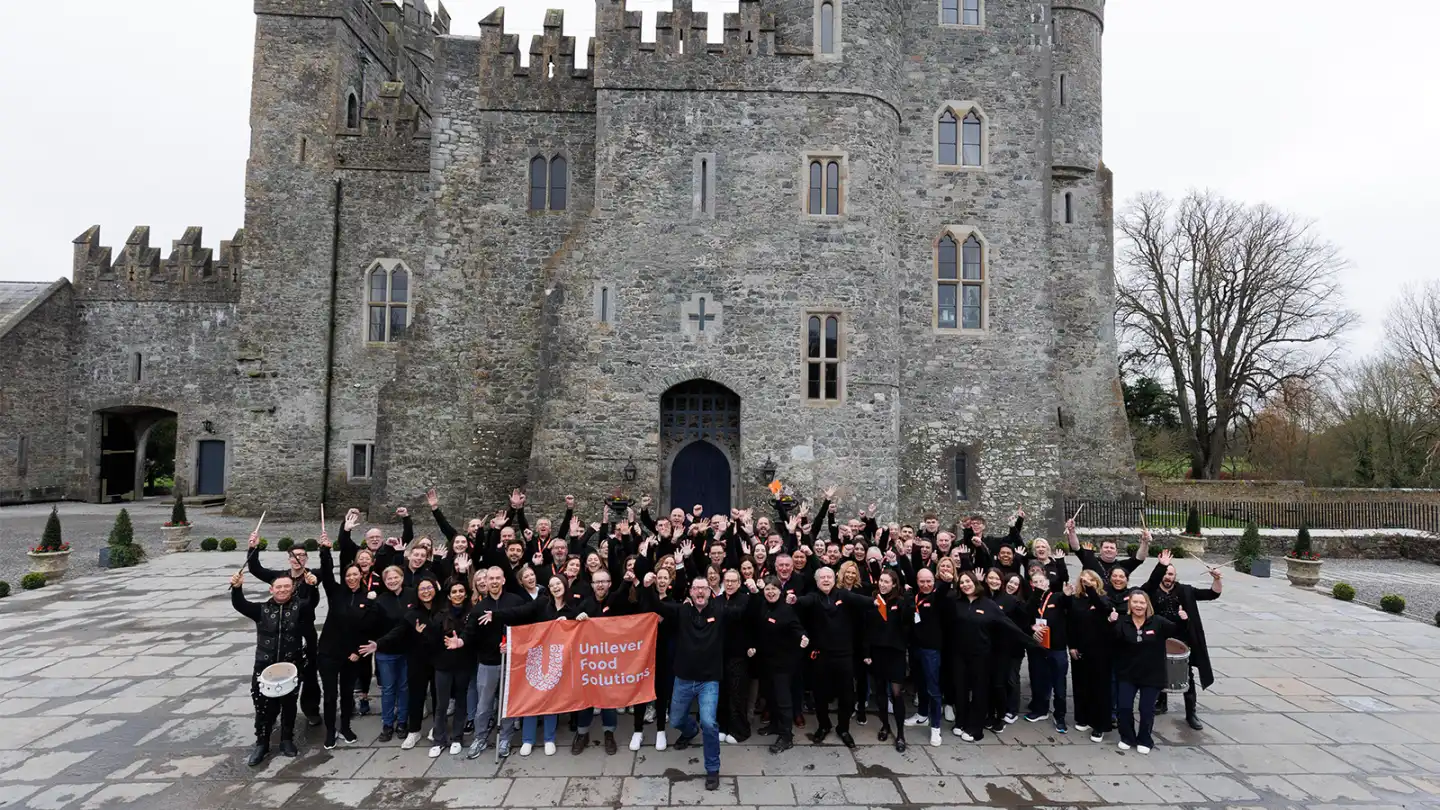
Aug 31st, 2026 | Ice Breaker, Team Building
Bringing Teams Together After Rapid Growth, a Merger or Acquisition
Your company has changed quickly. Now it’s time to help your people connect. The right team-building activity can break the ice, get people talking and bring new and newly combined teams together.
Growth can change a company quickly.
You might have hired a large number of new employees over the past few months. A merger may have brought two established teams together. Or an acquisition could mean people who previously worked for separate businesses are now colleagues.
Whatever caused the change, there is a simple challenge that often follows: people need an opportunity to get to know each other.
That does not necessarily mean there is a problem with your company culture or that teams are not getting along. Often, the organisation has simply changed faster than relationships have had time to develop.
People know the colleagues they worked with before. New employees know the people they interact with every day. After a merger or acquisition, employees may naturally continue spending time with colleagues from their original company.
Bringing everyone together can help. However, there is an important difference between putting people in the same room and actually helping them connect.
Why new teams do not always bond naturally
It is easy to assume that relationships will develop on their own.
Sometimes they do. Given enough time, people meet through projects, meetings, lunch breaks and everyday conversations.
But when a company grows quickly, those opportunities can become uneven. Employees might know everyone in their immediate department while having little contact with people elsewhere in the business.
Mergers and acquisitions create a similar situation. Two groups may now share a company name, but that does not mean the relationships between them immediately change.
If you want people to get to know each other sooner, it helps to create the opportunity deliberately.
This is where companies often decide to organise a social event.
Why simply getting everyone together is not always enough
There is nothing wrong with organising drinks, dinner or a company social. These can all be great ways for colleagues to spend time together.
The problem is assuming that putting everyone in the same place will automatically lead to new connections.
Think about what normally happens when a group arrives for drinks.
People look for someone they know.
They sit beside familiar colleagues. They join conversations with their own department. After a merger, employees from one of the original companies may naturally stay together. New hires might gravitate towards other recent starters.
Everyone can have an enjoyable evening while still spending most of it talking to exactly the same people they knew beforehand.
Getting people together is not necessarily the same as getting people to mix.
If the objective is to help colleagues build new relationships, some structure can make a significant difference.
Give people a reason to communicate
One of the most useful things a team-building activity can do is remove the pressure of having to start a conversation from nothing.
Walking up to a colleague you barely know and making small talk can feel awkward.
Give both people a challenge to solve, a goal to reach or something fun to work on together, and the interaction has a purpose.
They have something immediate to talk about.
That is why the right team-building activity can be particularly effective after a period of rapid hiring, a merger or an acquisition. It creates structured interaction between people who may not otherwise have much reason to speak.
The objective does not need to be complicated.
You want people communicating. You want them interacting outside their usual groups. Most importantly, you want to create an environment where they can relax, have fun and let some of the normal workplace formality disappear.
Once that happens, bonding often becomes much easier.
What good team building looks like in the room
Having delivered team-building events for corporate groups across Ireland for the last 30 years, there is a change we regularly see during an event.
The room can be relatively quiet at the beginning.
People are finding their feet. Some are talking to colleagues they already know. Others are waiting to see what is going to happen. There can be a little nervousness.
Then the activity starts.
People begin communicating because they have something to do together. Participation increases. Conversations become easier. There is more laughter. The volume in the room starts to rise.
By the end, the atmosphere can be completely different. People are chatting more freely, having fun and continuing conversations after the structured part of the event has finished.
That is an important point when planning a day for a newly formed team.
You do not need everyone to arrive feeling connected.
The activity should help create the conditions for connection.
What about employees who hate team building?
This is a genuine concern for organisers.
You may already know that some employees will love the idea of a team-building day. Others may be considerably less enthusiastic.
Often, that reluctance comes down to one thing: people do not want to be embarrassed.
Someone who barely knows their new colleagues may worry about being singled out, being asked to perform in front of everyone or being pushed into an uncomfortable situation.
Good team building should not work like that.
At Dynamic Events, our activities are not designed to single people out or embarrass them. The focus is on people participating together.
That distinction matters.
Instead of putting one individual under a spotlight, a well-designed activity gives the group something shared to focus on. People can contribute, communicate and gradually become more comfortable as the experience progresses.
The aim is not to force people to bond.
It is to make bonding easier.
Why structured team building can make the social part better
Choosing team building does not mean replacing the drinks, dinner or BBQ afterwards.
In fact, the two can work particularly well together.
The difference is the order.
If the first thing employees do is enter an unstructured social environment, many will naturally stay with the people they already know.
If they have already spent time completing an activity together, something has changed.
They have met more people. They have shared a few laughs. They have stories from the activity to talk about. The initial awkwardness has started to disappear.
When the structured activity finishes and the informal part of the event begins, conversation can flow much more naturally.
The team building has done the difficult part. It has given people a reason to start interacting.
Choosing the right team-building activity for a new group
There is no single best activity for bringing a new team together.
What works brilliantly for one company may be completely wrong for another.
Before choosing an activity, start with the group itself.
-
How many people are taking part?
Group size immediately affects which formats will work. An activity designed for a smaller team will not necessarily create the same experience for a much larger company group.
-
How well do people already know each other?
A group of new hires meeting for the first time is different from two established teams coming together after a merger.
Understanding the existing relationships helps determine how much structure the activity needs. -
What mix of personalities is in the group?
Not everyone wants a highly competitive or high-energy experience.
The activity needs to engage the group without depending on everyone having the same personality. -
Is the activity accessible to everyone?
Physical ability and the general profile of the group should be considered before choosing an activity.
If your objective is connection, you do not want to select something that unintentionally leaves part of the team on the sidelines. -
What space do you have available?
Venue matters more than organisers sometimes expect. The size and layout of the space can determine which activities are practical. If you already have a venue booked, the activity should work within it.
If you do not have a venue yet, it can make sense to consider the activity and venue together rather than making two separate decisions.
What do you actually want the group to achieve?
This is the most important question.
- Do you simply want new colleagues to meet and have fun?
- Do you want employees from two previously separate companies to mix?
- Are you trying to encourage interaction between departments?
- Do you want new hires and established employees to get to know each other?
Once the objective is clear, choosing the right format becomes much easier.
Should you decide who goes into each team?
If your objective is to encourage new connections, it is worth thinking about how groups are formed.
Some organisers deliberately mix departments, offices, new hires and longer-serving employees. Following a merger or acquisition, they might choose to mix employees from the previously separate organisations.
Other organisers prefer to let people form their own teams or have specific reasons for keeping certain groups together.
There is no rule that works for every company.
What matters is making the decision deliberately.
If the whole reason for the event is to help people meet colleagues outside their existing circles, letting everyone automatically form teams with their closest work friends may work against that objective.
Bringing teams together after a merger or acquisition
We have seen this need first-hand with Moore Ireland.
For its 50th anniversary and MKS partnership celebration, Moore Ireland brought 96 people from its Cork, Dublin and London offices together at Lyrath Estate.
The day needed to celebrate an important company milestone while also reinforcing unity and teamwork.
We designed an event that included collaborative team building, a shared social-impact activity and time for people to network and celebrate together. The structured activities gave colleagues something to work on collectively before the event moved into its more informal social elements.
It is a good example of why bringing people together after organisational change does not have to mean a complicated programme about "culture integration."
Sometimes people simply need the right environment to work together, talk and enjoy a shared experience.
Do not wait for silos to become a problem
After rapid hiring, a merger or an acquisition, it is tempting to assume everyone will eventually get to know each other.
They probably will, to some extent.
But relationships tend to follow the easiest path. People continue talking to their existing colleagues. Departments spend time within their own teams. New employees build relationships with the people closest to their role.
Over time, those patterns can become silos.
You do not need to wait until that becomes a serious organisational problem before doing something about it.
Bringing people together early gives employees an opportunity to build relationships outside their usual circles while the company is still adjusting to change.
And it does not need to feel like a corporate intervention.
With the right activity, it can simply feel like a good day with colleagues.
Your company has changed. Give your people a chance to catch up.
Rapid hiring, mergers and acquisitions can change the shape of a company in a matter of months.
Relationships take longer.
If you have reached the point where there are lots of new faces, previously separate teams are now working together or people simply have not had an opportunity to get to know each other, bringing everyone together can help.
The key is creating more than an opportunity to be in the same room.
Give people a reason to communicate. Give them enough structure to move beyond their usual groups. Choose something appropriate for the personalities, abilities and size of the team. Then give everyone the chance to relax and enjoy it.
You might be surprised how quickly a quiet room becomes a loud one.
Need help choosing the right team-building activity?
You do not need to know which activity you want before getting in touch.
Tell Dynamic Events about your group, how many people are attending, what has changed within the company and whether you already have a venue. We can recommend team-building options that suit your people and what you want to achieve.
Or, if you are still researching, explore our team-building activities across Ireland to see what might work for your group.

Aug 27th, 2026
Top Team Building Activities In Dublin
Looking for ideas for your next team event? We’ve rounded up some of the best team building activities in Dublin, with options for different group sizes, interests and event styles.
Read more
Aug 25th, 2026
Kick Off Event Guide For Companies In Ireland
What happens at a company kick-off event? Learn how kick-offs work, what to include in the agenda and what to consider when planning one in Ireland.
Read more
Aug 12th, 2026
SolarBuddy: Give The Gift Of Light For Christmas
This Christmas, give the gift of light with SolarBuddy’s Hour of Power. Unite your team in a hands-on activity building solar lights for communities in need. Experience a purpose driven team-building event with Dynamic Events that brings lasting impact and meaningful memories.
Read more

Similar Blog Posts


13 Fun St. Patrick’s Day Activities For Work
Practical St Patrick’s Day team building ideas for workplaces, including in-person, off-site, and virtual options for teams across Ireland.
Read more
13 Haunting Halloween Team Building Ideas For Irish Businesses
Planning a Halloween office event? These 13 team building ideas are fun, creative, and designed to bring Irish teams together.
Read more

4 Eco Friendly Team Building Ideas That Your Team Will Actually Enjoy
Discover four eco friendly team building events in Ireland that combine purpose, collaboration and real impact. Perfect for companies with CSR or sustainability goals.
Read more


Have a question about team building or event management,
or would you like to arrange a free demo of our
online team building activities?
We would love to hear from you.
Contact us today and we'll respond today.
Send us a message
Drop us a line
Email:
Office Address:
Unit 8 Burgage House,
Blessington, Co.Wicklow.
Follow Us


View Our Venue Partners, Locations and Event Types
